After a smoky Inland Northwest summer, Spokane and Coeur d’Alene homeowners often face the same practical question: can I clean this myself, or do I need professionals? Outdoor air has generally improved into late September, but fine soot, sticky residue, and odor that returns after a wipe-down can still show up indoors, especially after windows were open on bad-air days, after a structure fire, or after firefighting water mixed with smoke. This guide answers that do-it-yourself-versus-professional question honestly for Spokane and Coeur d’Alene homeowners. The Spokane Regional Clean Air Agency’s September 23, 2026 recap counted 14 days this summer when Spokane County air failed the health standard for fine smoke particles, including 11 straight days in August, the longest such run since that monitoring began in 1999.
What light do-it-yourself cleaning may reasonably cover
Some smoke situations are closer to “fresh outdoor haze on hard surfaces” than to a fire-loss cleanup. Light do-it-yourself cleaning may be reasonable when:
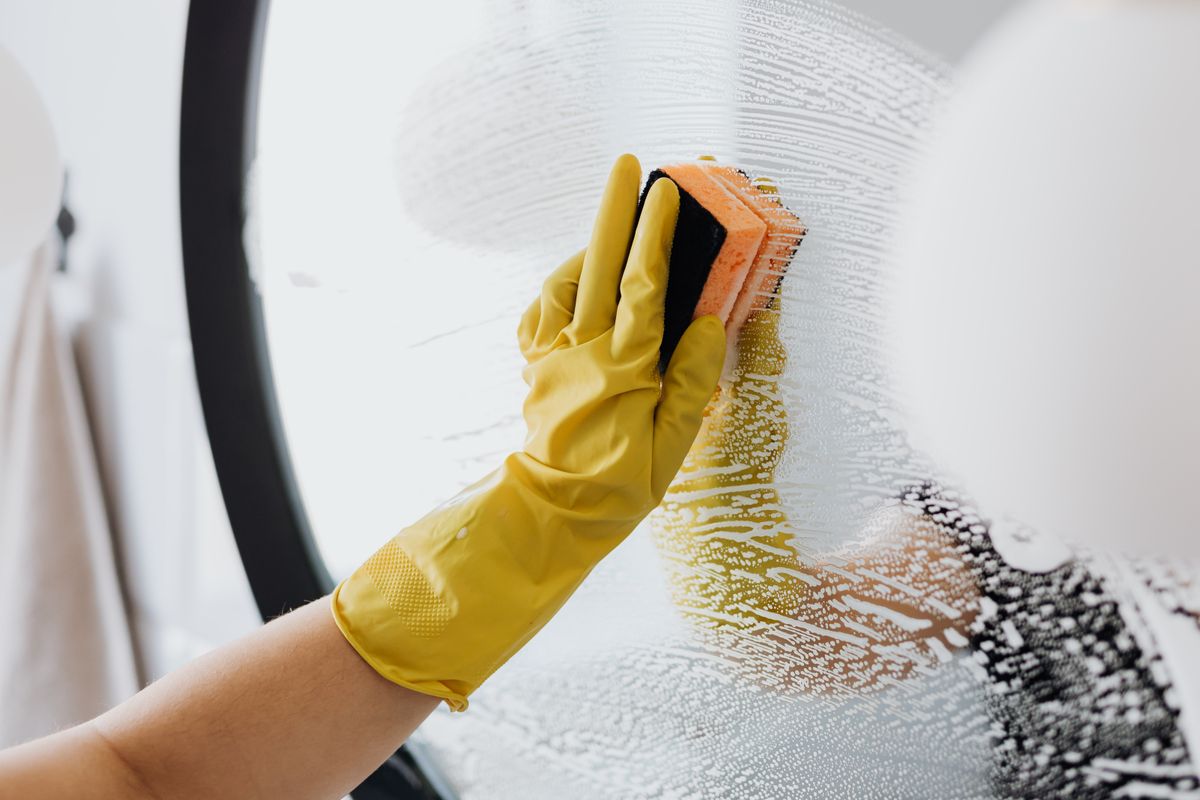
- The home only saw short outdoor wildfire haze with windows briefly open, and hard surfaces (glass, sealed counters, laminate) show a light film you can remove with ordinary household cleaners.
- You are wiping windows, sills, and high-touch smooth surfaces, not porous walls, insulation, or soft goods that hold odor.
- You are using temporary air filtration (a portable high-efficiency particulate air (HEPA) filter or equivalent room unit) while outdoor air is improving, without claiming that filtration alone “cleans” a fire loss.
- There was no structure fire, no firefighting water, and no heavy black or oily soot.
Before you clean anything: don’t re-enter a fire-damaged building until the fire department says it is safe, wear gloves and a well-fitted N95 respirator, keep children and pets out of the area, and don’t use a regular household vacuum on soot, because it can blow fine particles back into the room.
Even then, stop and reassess if odor returns within a day or two, if residue smears instead of lifting, or if you notice staining on porous materials. Those are signals the problem has moved past wipe-down territory.
When do-it-yourself cleaning usually fails
Call for a professional assessment when any of the following are true:
- Structure-fire soot: Residue from burning building materials is different from outdoor wildfire haze. It can be acidic, sticky, and chemically more aggressive on finishes and metals.
- Acidic or oily residues: Rubbing with the wrong cleaner can etch paint, cloud clear finishes, or drive residue deeper into porous surfaces.
- Porous materials: Drywall, insulation, carpet, upholstery, and some wood finishes hold particles and odor that surface wiping does not remove.
- Heating, ventilation, and air conditioning (HVAC) cavity migration: Smoke often travels through returns, ducts, and wall cavities. Cleaning only the rooms you can see leaves a recirculation path for odor and fine particles.
- Odor that returns: If smell comes back after airing out and wiping, residues are likely still in materials or the air system.
- Firefighting water: Suppression water creates a second loss: wet cavities, swollen materials, and moisture that needs drying, not just soot cleaning.
A home that “only smells smoky” after a nearby fire or a long bad-air stretch can still have residue where a do-it-yourself wipe-down never reaches.
Risks of do-it-yourself cleaning on real smoke and soot
Well-meant cleaning can make a real smoke loss harder:
- Pushing residues deeper: Aggressive scrubbing or the wrong chemistry can smear soot into pores and paint films.
- Cross-contaminating clean rooms: Carrying dirty cloths, shoes, or contents from a heavily sooted room into undamaged space spreads the problem.
- HVAC recirculation: Running the system to “air out the house” while filters and ducts are loaded can move fine particles through the building.
- Incomplete odor: Masking sprays and open windows rarely finish a fire-related odor; the source materials still need to be addressed.
- Claim documentation gaps: If you will involve insurance, early photos, room lists, and a clear before/after record matter. Random demolition or wholesale discard without notes makes contractor documentation and carrier review harder later.
None of this means homeowners should never touch a dusty sill after a hazy day. It means structure-fire soot, persistent odor, wet suppression damage, and HVAC involvement are poor bets for do-it-yourself cleaning.
What restoration contractors typically do
On a typical Spokane and Coeur d’Alene smoke or fire-related loss, restoration contractors usually start with assessment, what burned or entered, which rooms and materials were exposed, whether water from suppression is present, and how smoke may have moved through the building. Cleanup methods are matched to residue type and surface: controlled cleaning with high-efficiency particulate air (HEPA) vacuuming where appropriate, cleaning chemistry suited to the soil, content handling as the scope requires, and odor treatment aimed at the materials that still hold smell, not only the air in the room.
HVAC consideration matters when returns or ducts were in the smoke path; the team should not ignore a system that will re-share contaminated air. When firefighting water is part of the loss, extraction and drying sit alongside soot work so the home is not trading fire damage for swollen materials and secondary moisture problems.
ACOR’s fire and smoke work follows that same practical order: secure where needed, address soot/odor and suppression water, and document scope as work proceeds. Independent adjusters on staff support clear contractor documentation. We are restoration contractors, not public adjusters. We do not negotiate your coverage or settlement, interpret your policy, or take a fee tied to claim adjustment.
Insurance and documentation note
If you open a claim, carriers commonly rely on photos, inventories, and written scopes from the company doing the work. That paperwork is contractor-side documentation of conditions found and work performed. It is not public adjusting, and it does not decide what your carrier pays.
Coverage note: Whether any specific loss is covered depends on your policy and your carrier’s decision. ACOR does not guarantee coverage, approval, pricing, or payment.
More on process: Fire and smoke restoration · Insurance claims.
Soft next step
Lingering smoke odor, soot residue, or firefighting-water damage in Spokane, Liberty Lake, Coeur d’Alene, Post Falls, Hayden, Dalton Gardens, or Rathdrum? Call the line for your side of the state. Emergency phones are answered 24/7; we will be in contact within 60 minutes.
- Washington (Spokane / Liberty Lake): (509) 557-0559
- Idaho (Coeur d’Alene / Kootenai): (208) 254-2053
- Email: claims@acorrestoration.com
Office hours for scheduling and paperwork: Monday to Friday, 8:00am to 5:00pm (closed holidays). Office: 955 N Innovation Way, Post Falls, ID 83854.
Frequently asked questions
Is outdoor wildfire haze the same as structure-fire smoke damage?
Not usually. Short outdoor haze on hard surfaces is often lighter and more wipeable. Structure-fire soot from burning building materials can be more acidic or oily, travel through cavities and the heating, ventilation, and air conditioning system, and leave odor that returns after ordinary cleaning.
Can a portable air filter replace professional smoke cleanup?
A good room filter can reduce airborne particles while outdoor air improves, but it does not remove soot bonded to materials, clean ducts, or dry firefighting water. Filtration helps comfort; it is not a full restoration scope.
Will ACOR guarantee my insurance pays for smoke cleanup?
No. We do not guarantee coverage, approval, or payment. Your carrier decides under your policy. We provide contractor documentation and perform the restoration work you authorize. ACOR is not a public adjuster.
Do you serve both Spokane and Coeur d’Alene?
Yes,Spokane and Liberty Lake on the Washington side; Coeur d’Alene, Post Falls, Hayden, Dalton Gardens, and Rathdrum on the Idaho side.