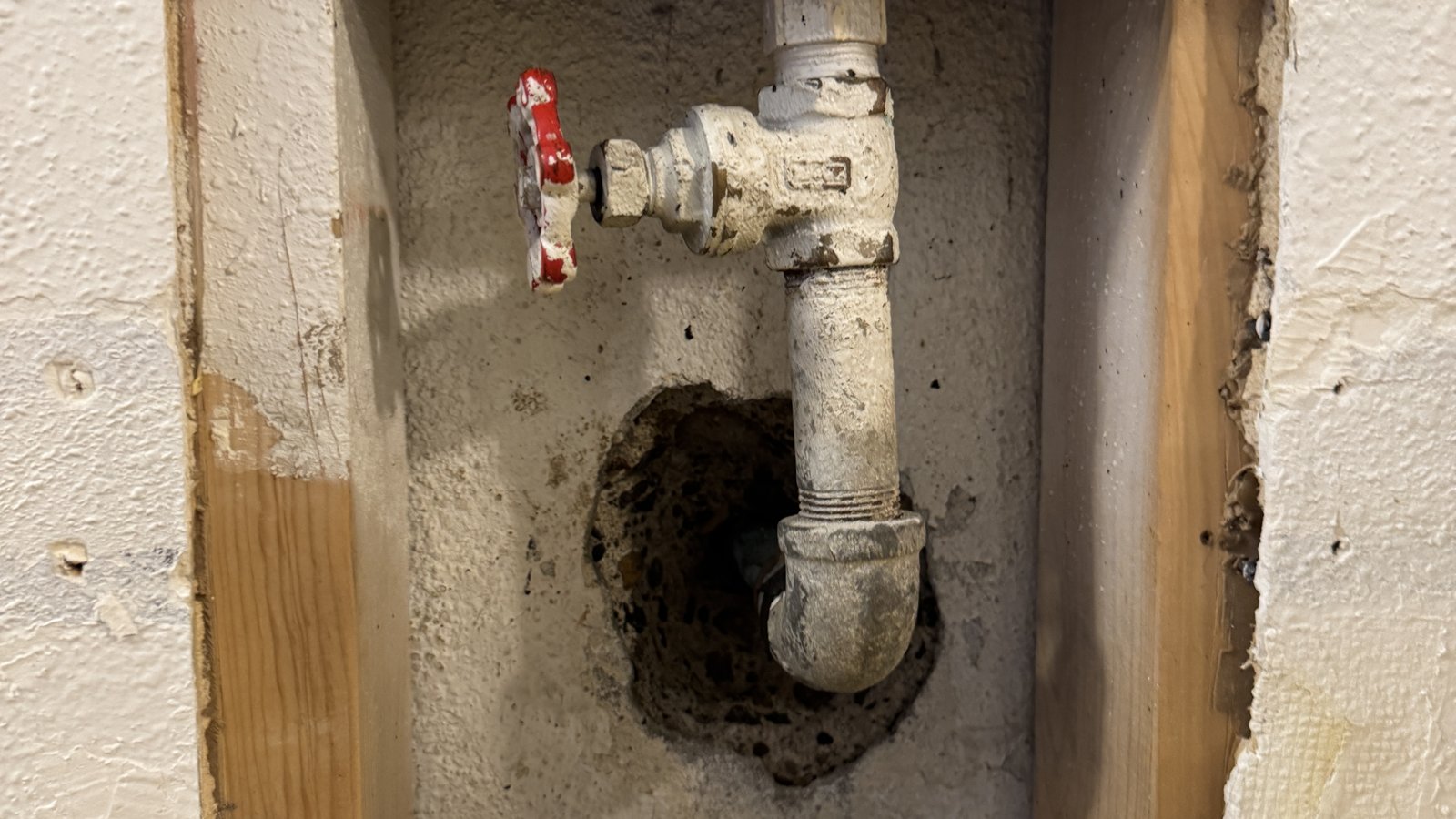
When a wildfire is finally out, it is easy to assume the hard part is over. For many households near the Spokane Complex fires, including Old Trails, Autumn Lane, and Fairview, the weeks after containment have raised a different concern: what happens when rain hits ground that no longer absorbs water the way it used to.
Local reporting in early and mid-September 2026 described flash-flood watches and runoff and debris concerns near burn scars, with Old Trails and Autumn Lane areas named in National Weather Service (NWS) and local coverage. City crews have used measures such as wattles and storm-drain filters to help manage ash and debris moving toward streets and drains.
Those steps help the public system. They do not remove the risk that water, mud, or ash-laden runoff can still reach yards, crawlspaces, foundations, and finished spaces, especially on or below recently burned slopes.
This post is for Spokane-area homeowners living near those burn scars, and for nearby Inland Northwest households (including Coeur d’Alene / Kootenai County) watching fall rains on fire-affected or hillside properties.
It is practical guidance on what to watch for, how to document conditions, and how restoration work and claims documentation typically fit together. It is not a coverage opinion, and it does not promise what any insurer will approve or pay.
Why burn scars change how rain behaves
Severe heat can leave soil less able to soak up rainfall. Vegetation that once slowed runoff may be gone. Ash and loose debris can clog ditches, culverts, and drains. The result, in the wrong storm, can be faster surface flow, localized flooding in low spots, and debris moving downhill, sometimes with little warning.
Geologists and local agencies have discussed elevated flooding and debris-flow awareness near streams and alluvial fans in burned terrain. Risk varies by burn severity, slope, drainage path, and storm intensity. A modest rain that would have been uneventful before a fire can still matter when the landscape has changed. Recovery of the ground itself can take a long time; seasonal storms over the next months, and into future seasons, are worth watching even when skies look calm today.
What Spokane and nearby homeowners should watch for
If you live near a Spokane Complex burn scar, or downhill from burned hillside, check regularly after rain or when a flash-flood watch is in effect:
- Water at the foundation or in low entries: seepage at slab edges, garage thresholds, basement or daylight-basement walls, and window wells.
- Crawlspace or basement moisture: damp soil, standing water, mud lines, or a sudden musty smell after storms.
- Yard and driveway channels: new rills, mud fans, or ash-colored silt where water has cut a path toward the house.
- Clogged or overloaded drainage: gutters, downspouts, French drains, and street inlets packed with ash, needles, or debris.
- Interior clues: wet carpet edges, soft drywall at baseboards, warped flooring, or staining that appears hours or a day after rain.
Also watch for ash-laden runoff that stains concrete or siding. Ash can carry fine particulates and other residues into living spaces when water carries it indoors. If you are unsure whether something is structural water intrusion or only outdoor staining, photograph it and ask a qualified mitigation contractor or your insurer how they want it evaluated.
Document early: photos, dates, and a simple timeline
Insurance carriers typically need a clear record of what happened and when. You do not need a polished report you need dated facts.
Here’s the same foundation corner shot two ways, the difference is what a claim file can use. Both images are royalty-free / illustrative examples, not ACOR job photos.
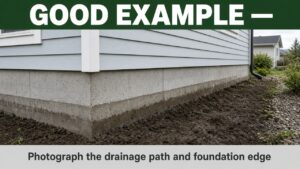

- Photograph before and after storms when you can do so safely. Wide shots of the yard and drainage path, then close-ups of water lines, mud, ash deposits, and any interior wetness.
- Note dates and times: when rain started, when you first saw water or debris, and when you took each set of photos. Phone metadata helps; a short written note helps more.
- Save alerts: screenshots of NWS watches or warnings, city notices, or road closures that explain why you were checking the property.
- List what you did: sandbags, cleared drains, moved belongings, shut off utilities if needed. Small actions matter in a claim file.
- Contact your insurer early if water, mud, or debris has entered the structure or if you reasonably expect damage. Ask how they want the loss reported and whether they want a preferred mitigation vendor or an independent inspection. Follow their instructions.
Documentation does not guarantee coverage. Policies differ on flood, mudflow, fire, and water-related causes. Early photos and a clean timeline still help you and your carrier understand the sequence of events.
When to call water mitigation
Call for professional mitigation when water has entered living space, a crawlspace, or materials that stay wet, carpet, pad, drywall, insulation, or framing. Standing water, sewage concerns, electrical hazards, or structural movement are reasons to prioritize safety first and professional help next.
Mitigation is usually about stopping further damage: extracting water, removing unsalvageable wet materials when appropriate, drying with measured moisture readings, and documenting conditions for the claim file. Reconstruction comes later once the structure is dry and the scope is clearer.
If you only have outdoor mud or ash on hard surfaces and no interior moisture, you may still want advice on cleaning and whether drains or grading need attention before the next storm. That is different from an emergency dry-out, but it is still worth addressing before fall rains continue.
How restoration and claims documentation fit (without the confusion)
After fire season and storm season collide, homeowners often hear several roles at once: insurer, adjuster, public adjuster, contractor. Keeping those roles clear reduces frustration.
ACOR Restoration Services LLC is a licensed restoration contractor based at 955 N Innovation Way, Post Falls, ID. We serve Spokane, Washington, and Coeur d’Alene / Kootenai County communities with water mitigation, smoke and fire-related cleanup and restoration, and related reconstruction support. We have licensed independent adjusters on staff to help with contractor documentation, the kind of scope, photos, and moisture records carriers often review. We are not public adjusters. We do not negotiate your coverage, advocate against your insurer as a public adjuster would, or guarantee what a policy will cover or pay.
In plain terms: if water, mud, or debris has affected your home, a restoration contractor’s job is to stabilize the property and document the work. Your insurer evaluates coverage under your policy. Keeping those lanes separate helps the process stay orderly.
Soft note for the broader Inland Northwest
The Spokane Complex burn scars are the reason this topic is urgent in Spokane right now. The same physics, hydrophobic soils, missing vegetation, debris-clogged drains, can apply anywhere fall rains hit recently burned or steep hillside ground. Homeowners in Coeur d’Alene, Post Falls, Hayden, Dalton Gardens, Rathdrum, Liberty Lake, and Spokane who live below slopes, near drainages, or on properties affected by other fires should use the same watch-and-document habits when heavy rain is forecast.
Practical checklist before the next storm
- Clear gutters, downspouts, and visible yard drains of ash and debris (when it is safe to do so).
- Walk the downhill path from burned or bare ground toward your foundation after light rain, note where water wants to go.
- Move valuables up off basement or garage floors if you are in a runoff path.
- Keep a charged phone, flashlight, and a simple photo folder ready for “before / after” shots.
- Know your insurer’s claims phone number and your policy number before you need them.
- Follow official NWS and local emergency guidance during flash-flood watches; do not drive through flooded roads or debris flows.
Short FAQ
Q: After rain near a Spokane Complex burn scar, what should I check first?
A: Walk the path from burned or bare ground toward your foundation when it is safe. Do not walk active floodwater or soft ash slopes alone. Look for water at slab edges, garage thresholds, window wells, crawlspace or basement moisture, new mud or ash-colored silt in the yard, and clogged gutters or drains. Interior clues can show up hours later, wet carpet edges, soft drywall at baseboards, or a sudden musty smell.
Q: Is mud or debris in the yard the same as structural water damage?
A: Not always. Outdoor mud or ash on hard surfaces may need cleaning and drainage attention before the next storm. Structural concern rises when water, mud, or debris enters living space, a crawlspace, or materials that stay wet (carpet, pad, drywall, insulation, framing). When unsure, photograph both the outdoor path and any interior wetness. Ask your insurer about coverage. Ask a mitigation contractor how they evaluate the path.
Q: What should I photograph for an insurance claim file?
A: Dated wide shots of the yard and drainage path, then close-ups of water lines, mud, ash deposits, and any interior wetness, before and after storms when you can do so safely. Save National Weather Service (NWS) or local alerts, note times, and list what you did (cleared drains, moved belongings). Photos do not guarantee coverage; they help document the sequence.
Q: When should I call water mitigation instead of waiting?
A: Call when water has entered living space or a crawlspace, or when carpet, pad, drywall, insulation, or framing stay wet. Standing water, if you suspect sewage or contaminated water, electrical hazards, or structural movement mean prioritize safety first, then professional extraction and drying. If it is only outdoor mud with no interior moisture, you may still want drainage advice before more fall rain. That is different from an emergency dry-out.
Q: Who documents the damage, and is ACOR a public adjuster?
A: Your insurer evaluates coverage under your policy. A restoration contractor stabilizes the property and documents conditions (scope, photos, moisture readings). ACOR Restoration Services LLC is a licensed restoration contractor with licensed independent adjusters on staff for contractor documentation. We are not public adjusters and do not negotiate coverage or guarantee what a policy will pay.
More water-damage questions: https://acorrestoration.com/faq/water-damage/
Contact
If you are dealing with water intrusion, mud or debris after rain near a burn scar, or related smoke and fire cleanup needs in Spokane or the Coeur d’Alene / Kootenai area, you can reach ACOR Restoration Services LLC at (208) 254-2053 or claims@acorrestoration.com.
Office hours are Monday to Friday, 8:00am to 5:00pm (closed holidays). The same phone number is available for emergency calls 24/7. We will talk through what you are seeing and whether mitigation or documentation support is the next useful step without pressure and without coverage promises.