Is your house ready if the temperature drops below zero again this winter?
Most people never think about their pipes until one splits. Then it’s water coming through a ceiling at two in the morning and nobody knows where to shut it off.
So let’s start there.
Find your main shutoff and test it once
If you only do one thing after reading this, do this. Find the main water shutoff for your house. Turn it off. Turn it back on. Make sure everybody who lives there knows where it is.
In many homes it’s in the basement or crawl space, near where the water line comes through the foundation wall. Some are in a utility closet. Some are buried behind boxes nobody has moved in ten years. Every house is different, which is exactly why you want to find yours on a calm afternoon instead of during an emergency.
If the valve is stuck, or it drips when you turn it, call a plumber. That’s a cheap fix in October and a very expensive problem in January.
The City of Spokane says the same thing in its frozen pipe guidance: know where your shutoff valves are and what they control, because shutting the water off fast cuts down on damage. We see it on water jobs all the time. Ten minutes of running water is a mop. Two hours is drywall, flooring, and a dehumidifier running for days.
The pipes that freeze first
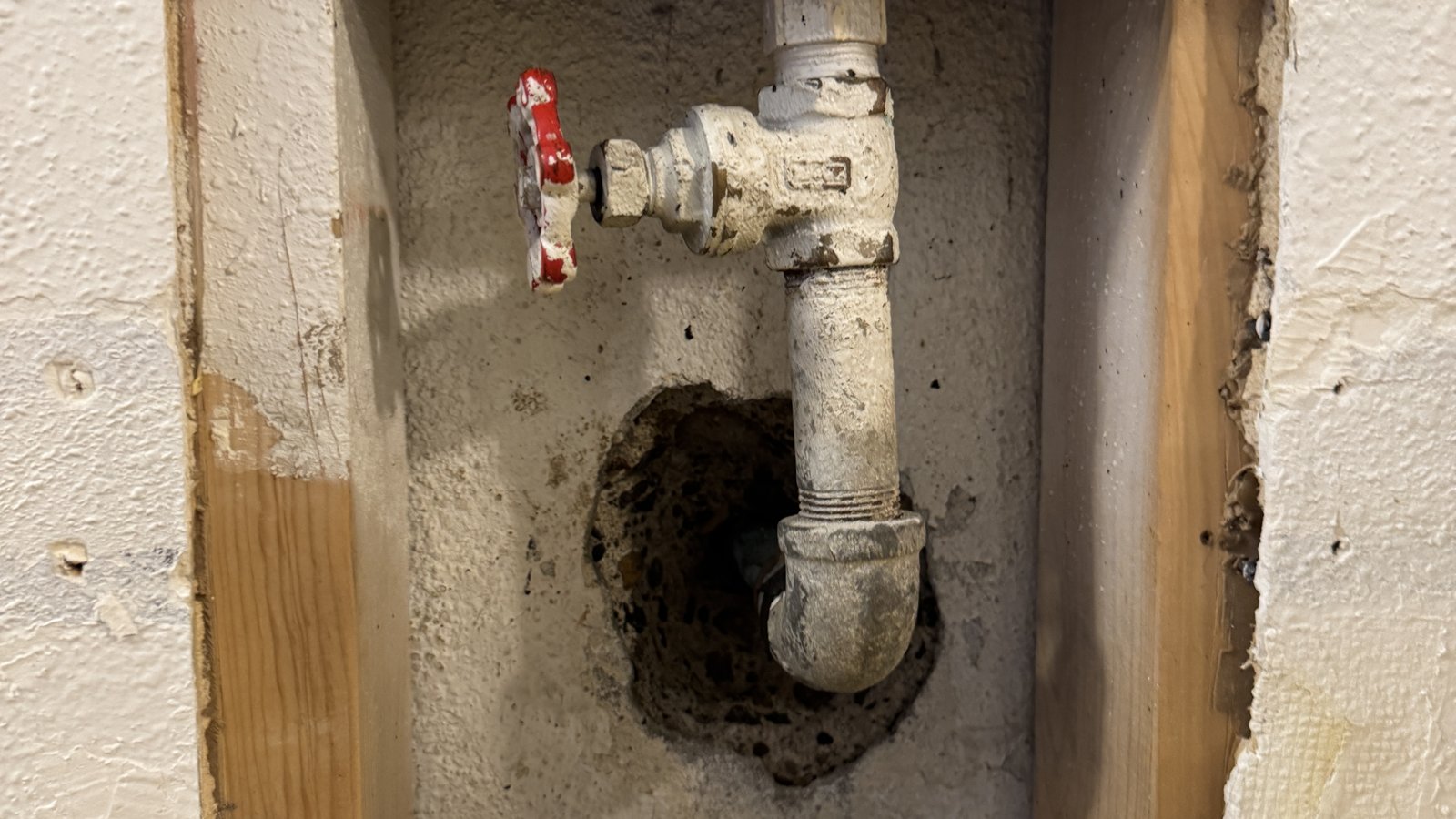
Outside faucets are the big one. The pipe that feeds a spigot runs through an outside wall, and if there’s still water sitting in it when a hard freeze hits, it can split inside the wall where you can’t see it. A spigot pipe like the one in the photo can leak for a while before anyone notices.
Kitchen sinks on outside walls are another. So are pipes in crawl spaces, unheated garages, and attics.
Here’s what the City of Spokane and the American Red Cross both recommend before real cold sets in:
- Unhook and drain your garden hoses, and drain any underground sprinkler lines.
- If there’s an inside valve for an outside faucet, close it, then open the outside faucet so the leftover water can drain out.
- Wrap pipes in crawl spaces, garages, and along outside walls with insulation. Heat tape can help in the worst spots.
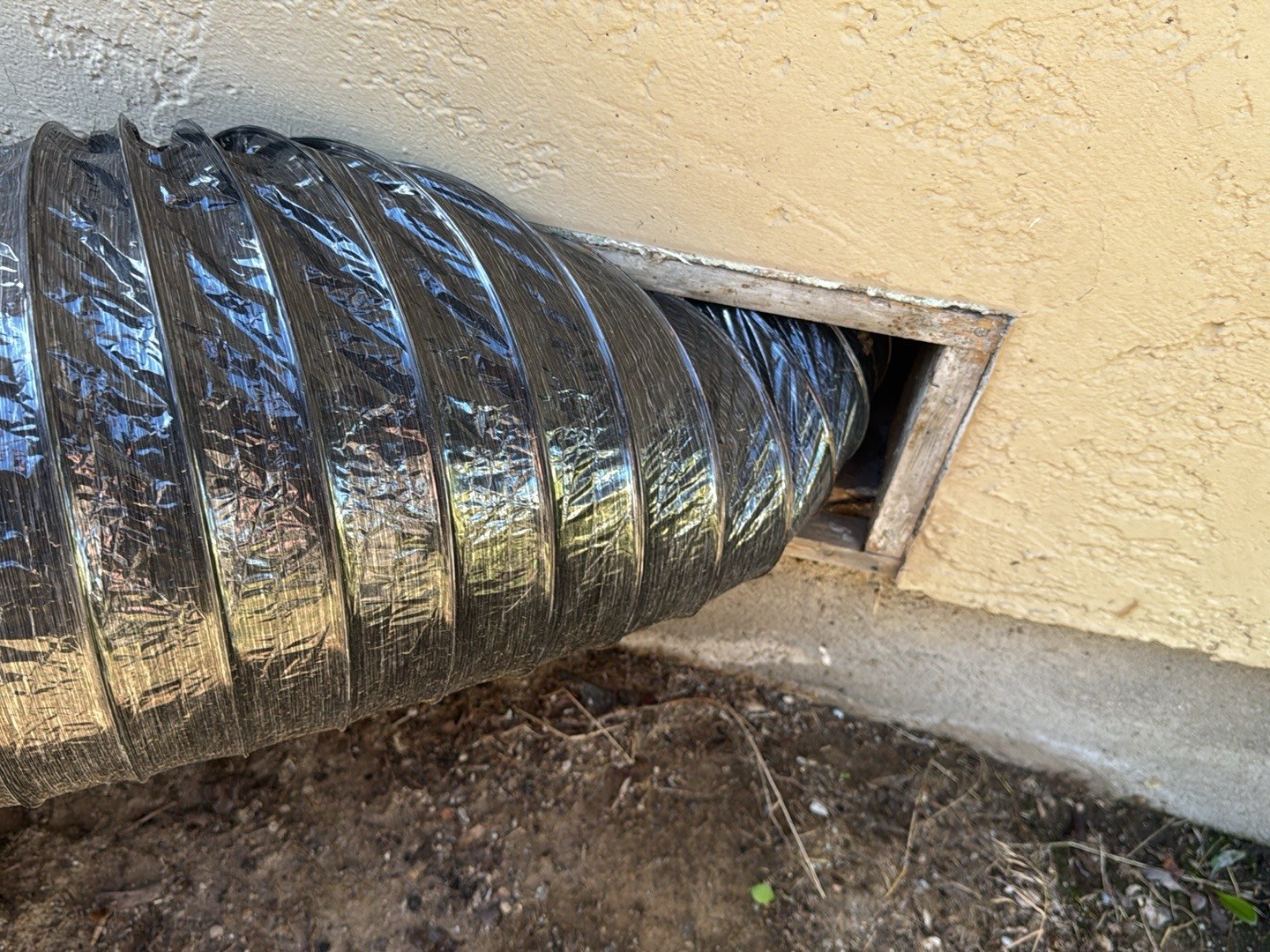
- Close up crawl space vents and keep the garage door shut if water lines run through it.
- On the coldest nights, open the cabinet doors under sinks on outside walls so warm air can get in.
None of that takes a pro. A Saturday and a trip to the hardware store covers most houses.
What about the thermostat?
People ask us what temperature to keep the house at. Honestly, the sources don’t all say the same thing, so here is who says what.
The City of Spokane says that even when you’re away, keep the house above 55 degrees. The American Red Cross also says no lower than 55 degrees if you’re leaving during cold weather, and to keep the thermostat at the same setting day and night. The Washington Office of the Insurance Commissioner says to keep your home above 60 degrees during winter in general.
So the 55 numbers are about being away, and the 60 is about the whole season. Pick what makes sense for your house. If you want to know how it ties into your insurance, ask your own agent.
If a pipe does freeze, shut the water off first, then warm it slowly with a hair dryer or heating pad on low. Never use an open flame. If you can’t find the frozen spot or can’t reach it, call a licensed plumber.
We’re not plumbers. A plumber fixes the pipe. We come in after, find where the water went, and dry it out before it turns into a mold problem.
If you’re standing in water right now, read what to do immediately after water damage, and here’s how our water damage restoration team works.
ACOR is licensed, insured, and bonded, and we have licensed adjusters on staff. Estimates are free. We can’t promise what your insurance will pay, but we’ll tell you straight what we see.
Washington: (509) 557-0559
Idaho: (208) 254-2053
Call ACOR 24/7 for emergencies.
We serve Spokane and Liberty Lake in Washington, and Coeur d’Alene, Post Falls, Hayden, Dalton Gardens, and Rathdrum in Idaho.